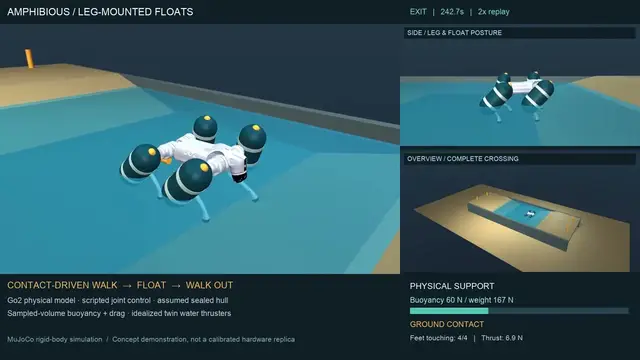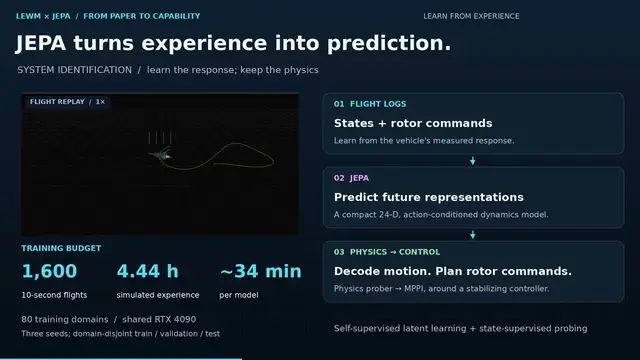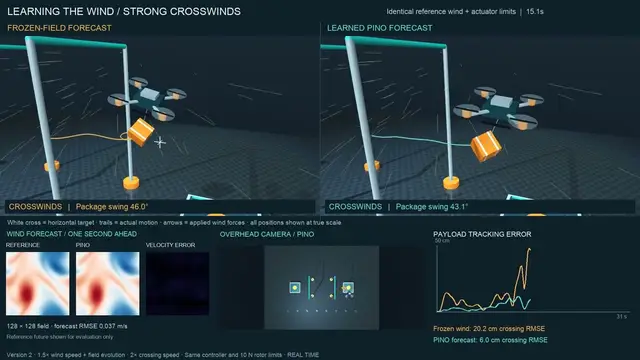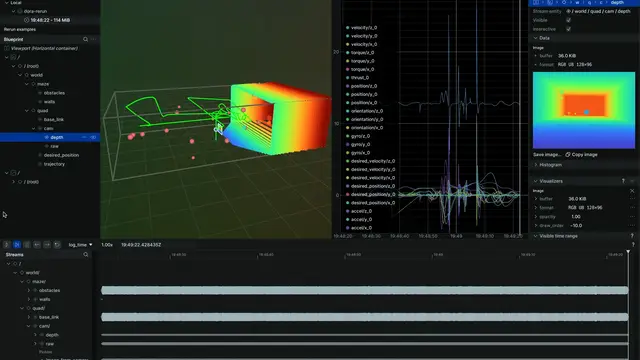
I build games and simulations for humans, robots and AI agents.
Building world models where humans, robots and AI agents learn, play, and evolve together.
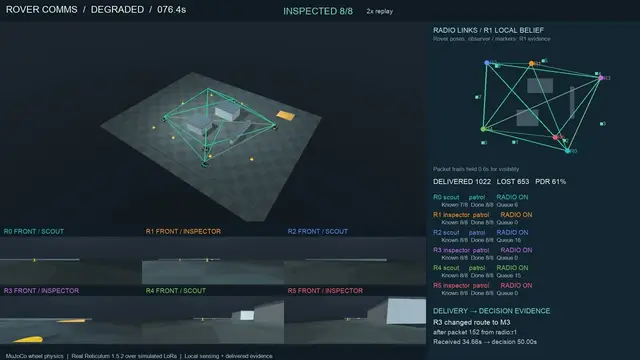
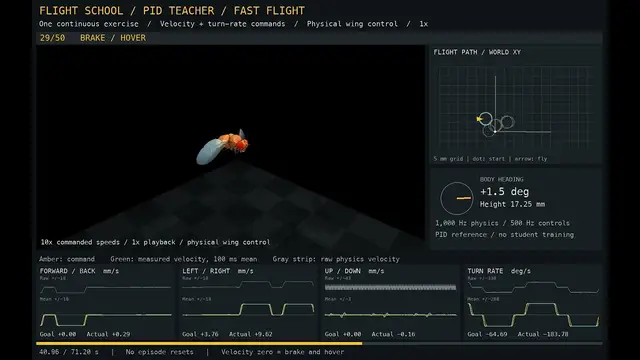
I spent many years making AAA games, then moved to simulation for defense and robotics. My environments train and test robots and AI agents before they act in the real world, so they protect people and stay aligned with the humans they serve.
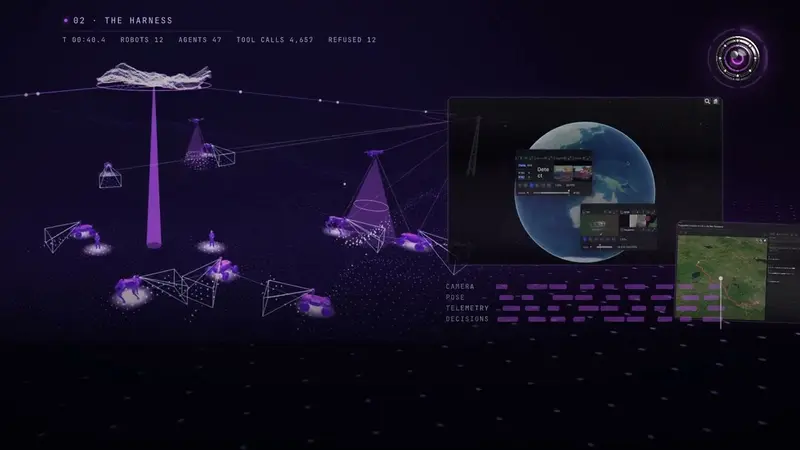
A self-hosted platform for AI agents that work with physical systems. Agents read sensors and video, fly simulated UAVs in Isaac Sim with PX4, control SUMO traffic, and record every run for replay.
An agent flew 9.227 km over Manhattan in 13 min 10 s: four waypoints, zero collisions.
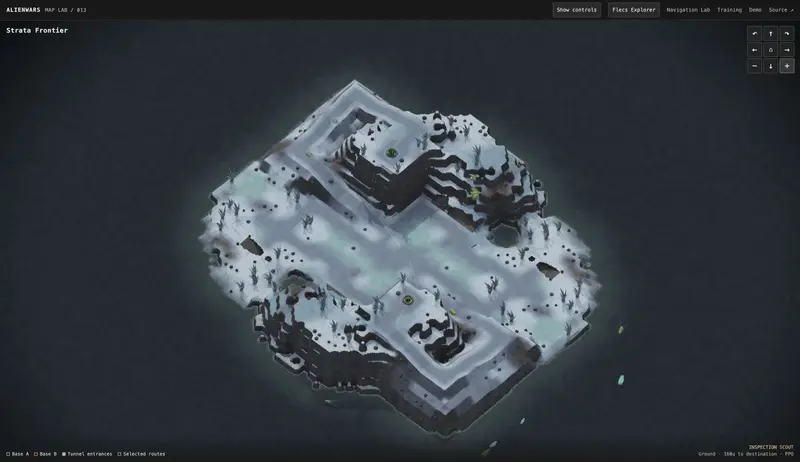
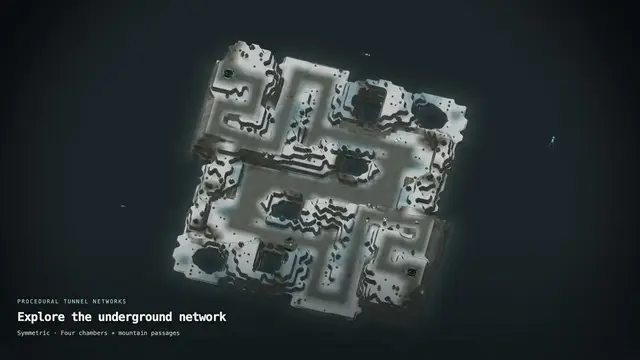
Procedural 3D worlds for training vehicle agents with PPO. Twelve vehicle types across ground, sea, air and underwater. The simulation, sensors and trained policies also run in the browser.
A 49.5-million-step reliability test kept a candidate policy that failed its gates out of the public demo.
I developed the simulator shown in Shield AI’s Hivemind fixed-wing demo. Hivemind is Shield AI’s autonomy software for military and commercial aircraft.
The demo video is from 2021. Shield AI interviewed me as a dynamical systems engineer in 2018.
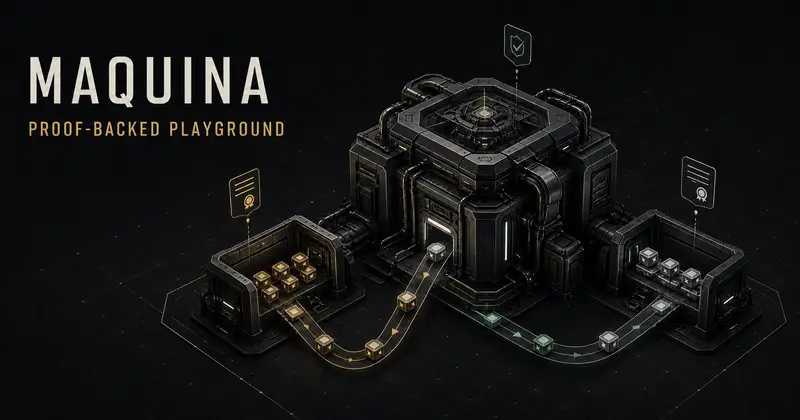
An execution model for simulated worlds. A Lean 4 kernel checks every state change, and each run can be replayed. Agents, people and planners propose actions; the kernel accepts or rejects each one.
Seven interactive showcases. Foundry: Night Shift steps through 95 checked snapshots.
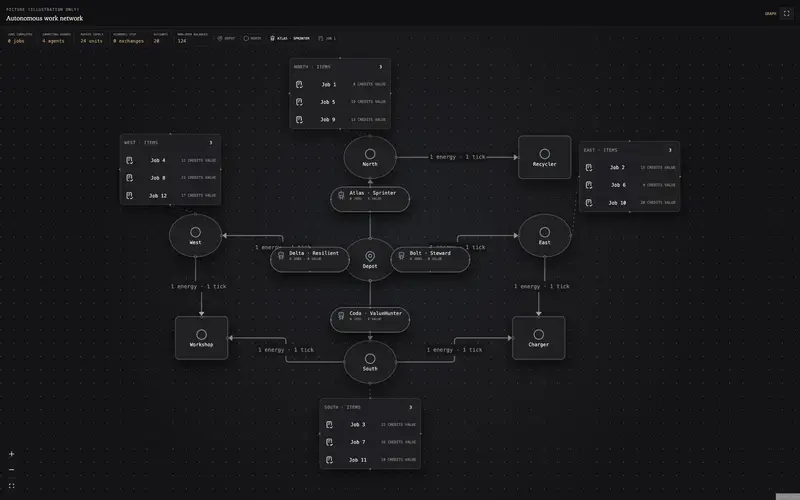
A Rust engine that models a problem as accounts, assets and exchanges. Search, optimization and reinforcement learning propose exchanges; the engine validates each one and keeps a replayable trace.
Fourteen problems share one service contract across the CLI, HTTP, MCP and the browser Studio.
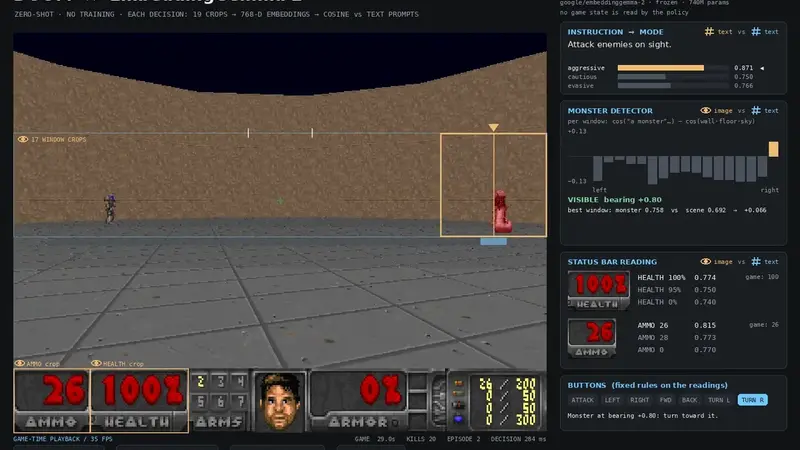
Veoveo, AlienWars Gym, Maquina and Axionomy, plus the experiments in the lab above.
2018–
Shield AI
Principal AI and Simulation Engineer (contract). AI and simulation infrastructure, harness, training, synthetics and building world models where humans, robots and AI agents learn, play and evolve together. Developed the simulator shown in the Hivemind fixed-wing demo.
2016–2026
Vertex Studio
Founder & CTO. Building scalable simulation infrastructure solutions and immersive experiences centered on human-robot-AI interaction. Designing and implementing multi-agent frameworks and behavior systems.
2018–2022
Simbotic AI
Lead Simulation and AI Engineer. Leading development of an open source physical AI platform for sim-to-real transfer and digital twin applications, and real-time synthetic data pipelines for training embodied AI models.
2017–2019
Civil Maps, Velodyne, Galois
Consulting: sensor characterization and visualization tools, Unreal Engine in development operations, and autonomous swarm simulation architecture for DARPA and DoD programs.
2016–2017
Red Pill VR
Real-time deep learning inference in a VR music MMO using TensorFlow, GStreamer and Unreal Engine 4; physics-based VR gameplay and full-body VR networking.
2015–2016
Rawbots
Designed and built a robot-crafting sandbox game with physics-simulated robots (Bullet Physics).
2005–2015
LucasArts & ILM, MunkyFun, Beyond Games
Gameplay, physics and networking on console titles, including Star Wars: The Force Unleashed. Simulation tools for real-time effects and previsualization on several films.
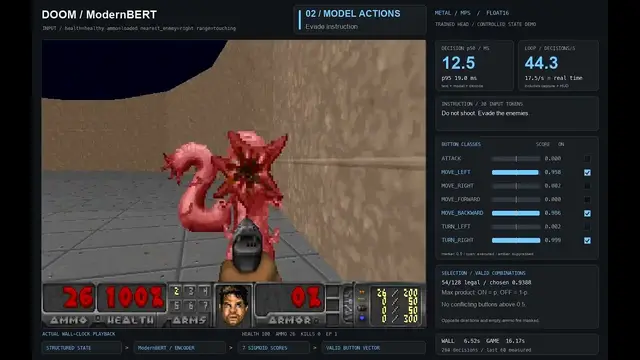
Actor model, behavior trees, memory systems and language models for agents in virtual worlds.
05 · About
Alex Rozgo
I started in console games, writing gameplay, physics and networking code at LucasArts and other studios across the industry. Since 2016 I have worked on simulation for robotics, autonomy and defense, and on the perception and learning systems trained in those simulations.
I prefer small sets of well-defined parts: typed state, explicit rules, and runs that can be replayed. I write Rust by choice, C and CUDA where performance requires it, and Python for training and tooling.
“With four parameters I can fit an elephant, and with five I can make him wiggle his trunk.”